








If you have ever looked at an old credit card sitting in your wallet and thought:
“I don’t even use this card anymore. Maybe I should just close it.”
You are not alone.
A lot of people try to clean up their finances by closing old credit cards. I have done it myself in the past without fully understanding how credit scores actually work. After years of dealing with banks, rebuilding my own credit, and learning financial lessons the hard way, I realized something important:
Closing a credit card can absolutely hurt your credit score — but not always in the way people think.
Sometimes the damage is small. Sometimes it can drop your score more than expected. And sometimes closing a card is actually the right decision.
The key is understanding what really happens behind the scenes when an account gets closed.
In this article, I want to break it down in simple, real-world language without the complicated banking jargon.
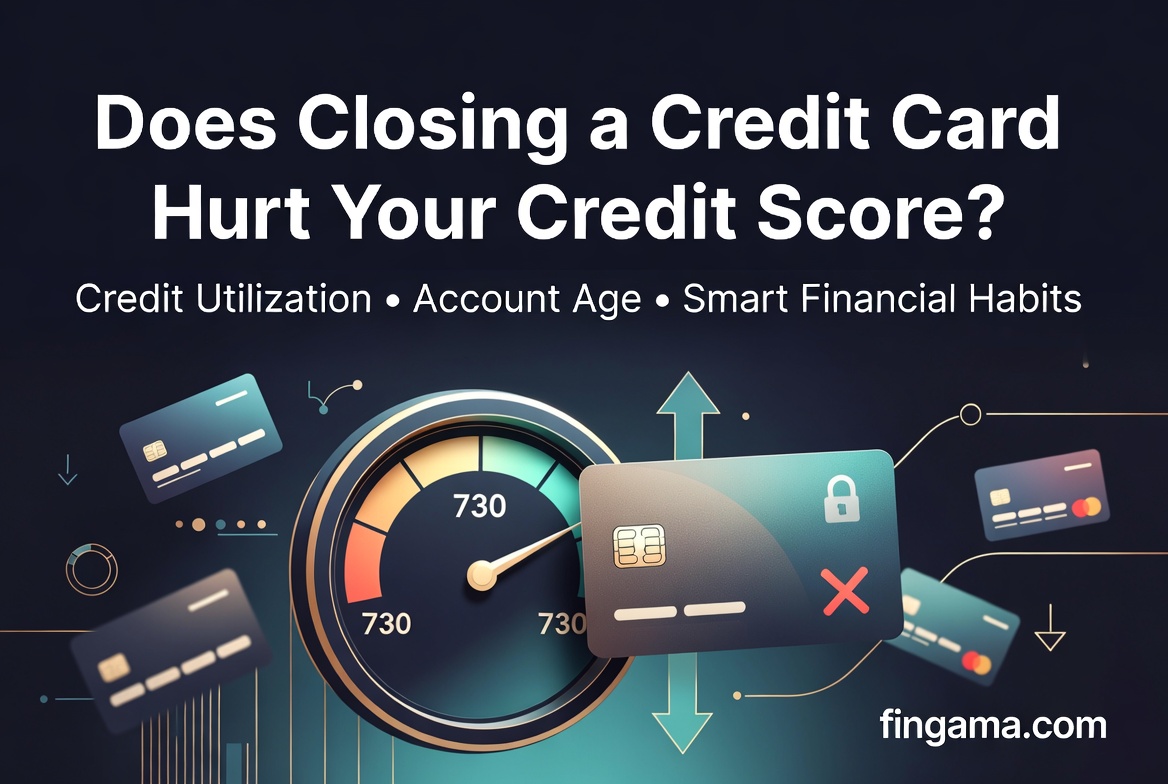
Does Closing a Credit Card Hurt Your Credit Score?
The short answer is:
Yes, it can.
But the impact depends on:
- your total available credit,
- the age of the account,
- your spending habits,
- and the rest of your credit profile.
For some people, the effect is minor.
For others, it can seriously affect their credit utilization ratio and overall score.
This is one of those financial topics where people accidentally hurt themselves trying to “do the responsible thing.”
Why Closing a Credit Card Can Lower Your Score
Your credit score is based on several factors, but two major ones are:
1. Credit Utilization
This is a big one.
Credit utilization means how much of your available credit you are using.
For example:
- Card A limit = $5,000
- Card B limit = $5,000
Total available credit = $10,000
If your balance is $2,000, then your utilization is 20%.
That is considered pretty healthy.
But let’s say you close one of those cards.
Now your available credit drops from $10,000 to $5,000.
Your same $2,000 balance now becomes 40% utilization.
That higher utilization can hurt your score fast.
Credit scoring systems generally like lower utilization percentages.
Many people try to stay:
- under 30%,
- ideally under 10%.
Example of Credit Utilization
Credit Utilization=Total Credit LimitTotal Balance×100
This is one of the biggest reasons people see their score drop after closing a card.
2. Length of Credit History
Older accounts help your credit profile.
If you close one of your oldest cards, it may eventually reduce the average age of your accounts.
Lenders like to see long-term credit history because it shows experience managing debt over time.
This is especially important for people rebuilding credit.
When I was rebuilding my own credit after financial mistakes years ago, I learned that older accounts can quietly help your score more than people realize.
Sometimes the smartest move is simply keeping an old card open and barely using it.
When Closing a Credit Card Makes Sense
Now here is the part many articles don’t talk about enough:
Sometimes closing a card is the right move.
Not every card deserves to stay open forever.
You Might Want to Close a Card If:
The annual fee is too high
If a card charges a large yearly fee and gives you little value, closing it may be worth it.
The card tempts overspending
Some people know certain cards lead them into bad habits.
Real financial growth is not only about the score.
It is also about behavior.
A slightly lower score is sometimes better than falling deeper into debt.
You are simplifying your finances
Too many accounts can become stressful to manage.
The card has poor terms
High interest rates, hidden fees, or bad customer service can make some cards not worth keeping.
I have seen people stay attached to bad financial products just because they fear losing points on a score.
That mindset can become unhealthy too.
When You Should Probably Keep the Card Open
There are situations where keeping the card open is usually smarter.
Keep It Open If:
It is one of your oldest accounts
Old accounts help your credit history.
It has a high credit limit
Higher limits help utilization ratios.
It has no annual fee
If it costs nothing to keep open, it may help your profile more than hurt it.
You are planning a major purchase soon
If you are applying for:
- a mortgage,
- car loan,
- apartment,
- or business financing,
you usually do not want to make sudden changes to your credit profile.
What Happens to Your Credit Score After Closing a Card?
The impact varies.
Some people barely notice a difference.
Others can lose:
- 10 points,
- 20 points,
- or more.
Usually, the biggest problem is increased utilization.
That is why people with high balances often get hit harder after closing cards.
If your balances are already low and your profile is strong, the impact may be smaller.
The Emotional Side of Credit Cards
This is something many finance websites ignore.
Money is emotional.
Credit cards are emotional.
A lot of people have a complicated relationship with debt because of:
- stress,
- survival,
- bad financial decisions,
- pressure,
- or years of struggle.
I understand that personally.
Sometimes people close cards because they want a fresh start psychologically.
And honestly, I get it.
But financial decisions should be made strategically, not emotionally.
That is one lesson I learned after years of rebuilding and dealing with financial setbacks.
A Smarter Alternative to Closing a Credit Card
Instead of closing the card immediately, consider this:
Keep the account open but use it lightly
For example:
- buy gas once a month,
- pay for a small subscription,
- or make one small purchase occasionally.
Then pay it off fully.
This keeps the account active while helping:
- credit age,
- utilization,
- and payment history.
Sometimes doing less is actually the smarter financial move.
What Happens If the Credit Card Company Closes the Account?
This happens more than people realize.
If you stop using a card for a long time, some companies may close it due to inactivity.
And yes — the same utilization issues can happen afterward.
That is why keeping older cards lightly active can help protect your profile.
Does Closing a Secured Credit Card Hurt Your Credit?
It can.
Many people rebuilding credit start with secured cards.
Closing one can still:
- reduce available credit,
- affect account age,
- and impact utilization.
If the card has no fee and is helping your profile, you may want to keep it open longer.
Final Thoughts
Closing a credit card is not automatically bad.
But it is not always harmless either.
A lot of people accidentally hurt their credit score because they do not understand:
- utilization,
- account age,
- and how scoring systems work.
From my own experience rebuilding credit and learning financial lessons over many years, I can say this:
Good financial decisions are rarely emotional decisions.
Sometimes keeping an old credit card open quietly helps your financial future more than you realize.
Before closing any card, take a step back and ask:
- Will this affect my utilization?
- Is this one of my oldest accounts?
- Am I closing it for the right reason?
- Will this help my long-term financial goals?
Credit is not just about numbers.
It is about understanding how the system works — and making smarter moves over time.
Frequently Asked Questions
Is it bad to close a credit card with zero balance?
It can still affect your utilization and account age, even with a zero balance.
How long does a closed account stay on your credit report?
Closed accounts in good standing can remain on your report for years.
Will closing a credit card improve my credit?
Usually not. In many cases, it can lower your score temporarily.
Should I close unused credit cards?
Not always. If they have no annual fee and help your utilization or account age, keeping them open may be smarter.
What is the best credit utilization ratio?
Many experts recommend staying below 30%, while under 10% is often considered ideal for strong credit scores.