








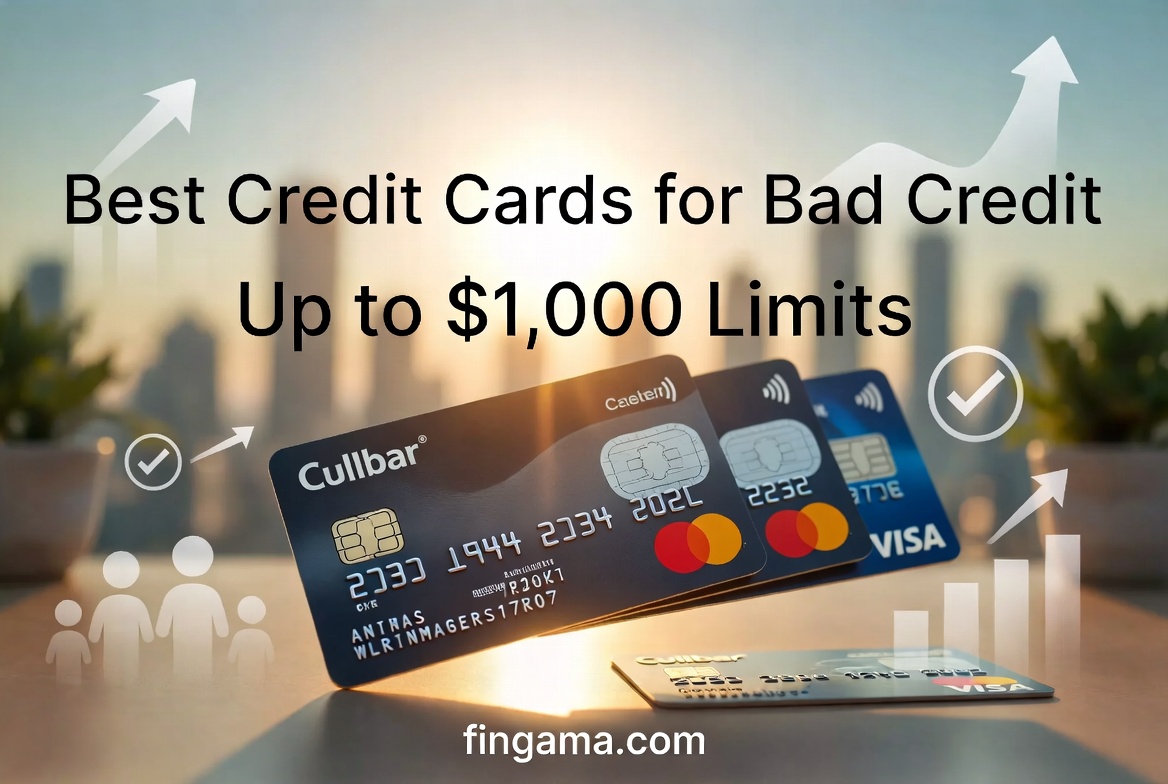
If you have bad credit, finding a credit card with a decent limit can feel difficult. Many cards for low credit scores start with limits below $500, high fees, or strict approval requirements.
The good news is that some credit cards for bad credit may offer starting limits near $1,000 — or allow cardholders to reach a $1,000 limit after responsible use.
In this guide, we’ll cover:
- How $1,000 credit limit cards work
- Secured vs. unsecured cards
- What credit score you may need
- Cards that may offer higher starting limits
- How to improve your approval odds
- Tips to build credit safely
Can You Get a $1,000 Credit Limit With Bad Credit?
Yes, it’s possible.
However, approval and credit limits depend on several factors, including:
- Your credit score
- Income
- Existing debt
- Payment history
- Recent credit applications
Some lenders may approve applicants with poor or fair credit for limits around $1,000, while others may start lower and increase the limit over time.
It’s important to understand that no issuer can guarantee approval for everyone.
What Is Considered Bad Credit?
Most lenders consider a FICO score below 580 to be bad credit.
Common reasons for bad credit include:
- Late payments
- Collections accounts
- High credit card balances
- Bankruptcy
- Limited credit history
Even with a low score, many people can still qualify for certain secured or unsecured credit cards.
Best Types of Credit Cards for Bad Credit With Higher Limits
1. Secured Credit Cards
Secured cards require a refundable security deposit.
In many cases, your deposit determines your credit limit. For example:
- $200 deposit = $200 limit
- $1,000 deposit = $1,000 limit
These cards are often easier to qualify for and can help rebuild credit when used responsibly.
Pros
- Easier approval requirements
- Opportunity to rebuild credit
- Some cards upgrade to unsecured accounts
Cons
- Requires upfront deposit
- Lower rewards compared to premium cards
2. Unsecured Credit Cards for Bad Credit
Unsecured cards do not require a deposit.
Some issuers offer starting limits between $500 and $1,000 for applicants with fair or rebuilding credit profiles.
However, unsecured bad credit cards often come with:
- Higher interest rates
- Annual fees
- Lower initial limits
Features to Look For in a Bad Credit Credit Card
Not all cards are equal. Before applying, compare:
Credit Reporting
Choose a card that reports to all three major credit bureaus:
- Experian
- Equifax
- TransUnion
This helps build your credit history faster.
Low or No Annual Fees
Some bad credit cards charge expensive annual or monthly maintenance fees.
A lower-fee card may save money while helping you improve your score.
Automatic Credit Limit Reviews
Some issuers review accounts after several months of on-time payments and may increase your limit.
This can help improve your credit utilization ratio over time.
Mobile App and Account Tools
Good account management tools can help you:
- Track spending
- Avoid missed payments
- Monitor your credit progress
How to Improve Your Chances of Getting a $1,000 Credit Limit
1. Reduce Existing Balances
High balances can lower approval odds.
Paying down debt before applying may help.
2. Avoid Multiple Applications
Submitting several applications in a short time can hurt your credit score.
Research cards carefully before applying.
3. Show Stable Income
Lenders want to see that you can repay borrowed money.
Even part-time or freelance income may help support an application.
4. Consider a Secured Card First
If you struggle to qualify for unsecured cards, a secured card may be the easiest path to a higher limit.
Some secured cards also offer upgrade opportunities after responsible use.
How to Build Credit Responsibly
Getting approved is only the first step.
To improve your score long term:
Pay On Time Every Month
Payment history is one of the biggest factors in your credit score.
Even one missed payment can hurt your progress.
Keep Credit Utilization Low
Try to use less than 30% of your available credit.
Example:
- $1,000 limit
- Keep balance below $300
Lower utilization may improve your score faster.
Keep Older Accounts Open
The age of your credit history matters.
Avoid closing older accounts unless necessary.
Common Mistakes to Avoid
Applying for Cards With Unrealistic Claims
Be cautious of websites promising:
- Guaranteed approval
- Instant $10,000 limits
- No credit checks for everyone
Legitimate lenders always review financial information before approving applications.
Ignoring Fees and Interest Rates
Some cards marketed to bad credit borrowers charge:
- High annual fees
- Monthly maintenance fees
- Extremely high APRs
Always read the terms carefully.
Maxing Out Your Card
Using your full limit can increase your credit utilization and negatively impact your score.
Are $1,000 Credit Limits Good for Building Credit?
Yes.
A higher limit can help lower your credit utilization ratio if you manage the account responsibly.
For example:
- $200 balance on a $1,000 limit = 20% utilization
- $200 balance on a $300 limit = 67% utilization
Lower utilization is generally better for credit scoring models.
Best Realistic Credit Card Options
1. Discover it® Secured Credit Card
One of the strongest rebuilding cards because:
- refundable security deposit determines limit
- reports to all 3 bureaus
- possible graduation to unsecured
- cashback rewards
- no annual fee
If someone deposits $1,000, they can often get a $1,000 limit.
2. Capital One Platinum Secured
Popular for rebuilding credit because:
- lower deposit requirements
- possible automatic limit reviews
- easier approval than many mainstream cards
Limits vary, but some users grow toward $1,000 after responsible use.
3. OpenSky® Secured Visa®
Often recommended for very low credit scores because:
- no credit check in many cases
- secured structure
- reports to major bureaus
A $1,000 deposit can usually support a $1,000 limit.
4. OneMain Financial BrightWay® Card
One of the more realistic unsecured options mentioned in 2026 credit-building lists.
- starting limits can go up to $2,000
- rewards on payments
- credit line increase potential
Approval still depends on income and credit profile.
5. Credit One Bank® Platinum Visa®
Commonly available to bad-credit borrowers.
- easier approvals than prime cards
- lower starting limits are common
- watch annual fees and APR carefully
Some users report reaching or receiving $1,000 limits over time.
6. Indigo® Mastercard®
Marketed toward rebuilding credit.
- prequalification available
- some offers advertise access to higher limits
- terms vary heavily by applicant
Read fees carefully before applying.
The Reality About $1,000 Limits
Most people with bad credit are initially approved for:
- $200–$500 limits
- secured cards
- high APR products
That’s extremely common according to both financial sites and user discussions online.
A realistic strategy is:
- get approved,
- make on-time payments for 6–12 months,
- request increases,
- then qualify for stronger cards.
Finding the best credit cards for bad credit with $1,000 limits may take research, but there are legitimate options available for many borrowers.
The key is choosing a card that:
- Reports to major credit bureaus
- Has manageable fees
- Offers opportunities for credit growth
- Fits your financial situation
Whether you choose a secured or unsecured card, responsible use can help rebuild your credit profile over time and improve your chances of qualifying for better financial products in the future.
Frequently Asked Questions
Can I get a $1,000 credit limit with a 500 credit score?
Possibly. Some secured cards and certain unsecured cards may approve applicants with lower credit scores, depending on income and overall credit history.
Do secured cards help build credit?
Yes. Many secured credit cards report payment activity to the major credit bureaus, which may help improve your credit over time.
How long does it take to increase a credit limit?
Some issuers review accounts after 6 to 12 months of responsible use. Increases are not guaranteed.
Will applying hurt my credit score?
Most applications create a hard inquiry, which may temporarily lower your score by a few points.
What is the easiest type of card to get with bad credit?
Secured credit cards are often easier to qualify for because they require a refundable security deposit.
Final Thoughts
Rebuilding your credit is not about being perfect overnight — it’s about making consistent progress one step at a time.
A credit card with a $1,000 limit may seem small compared to premium cards, but for many people, it represents something much bigger: a fresh start, a second chance, and an opportunity to build a stronger financial future.
Every on-time payment matters. Every dollar paid down matters. Over time, responsible habits can lead to higher credit scores, better approval odds, lower interest rates, and greater financial freedom.
No matter where your credit stands today, improvement is possible. The key is choosing the right tools, staying disciplined, and focusing on long-term progress instead of quick fixes.
Small financial wins add up — and the steps you take today can open doors tomorrow.