








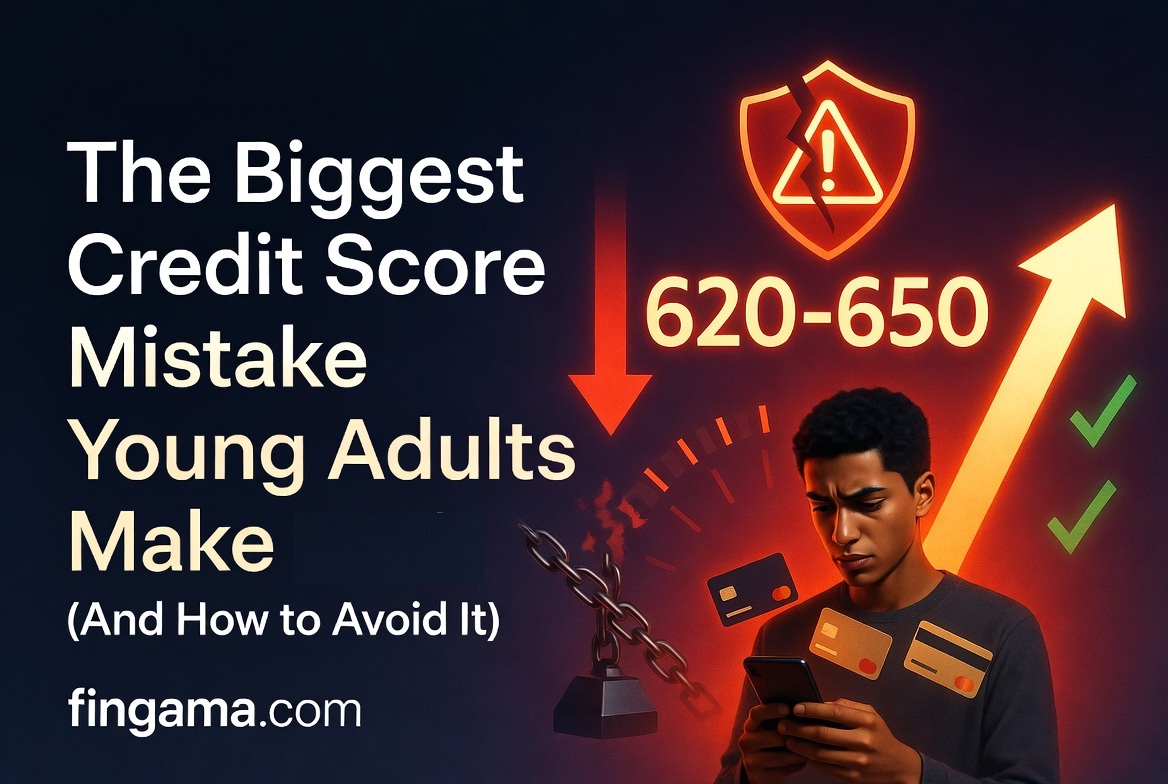
The biggest credit score mistake young adults make is simple—but extremely damaging:
Treating credit cards like “extra money” instead of borrowed money.
This one habit leads to debt, missed payments, high utilization, and a damaged credit score that can take years to fix.
Most young adults don’t ruin their credit because they are irresponsible. They ruin it because they were never taught how credit actually works.
Let’s break it down in a simple way.
Why This Mistake Happens So Often
When someone gets their first credit card, it feels like free money.
You swipe now… pay later.
That delay creates a dangerous illusion:
- “I can afford it later”
- “I’ll pay it off next month”
- “It’s just a small purchase”
But credit cards are not free money—they are short-term loans with strict rules.
Without understanding this, it’s easy to overspend.
What Actually Happens When You Treat Credit Like Free Money
This is where problems begin:
1. Credit Card Balances Start Growing
Small purchases add up quickly:
- Food delivery
- Subscriptions
- Shopping
- Entertainment
Before you know it, you owe more than expected.
2. Credit Utilization Goes Up
Credit utilization is how much credit you’re using compared to your limit.
Example:
- Credit limit: $1,000
- Balance: $800
- Utilization: 80% ❌
High utilization signals risk to lenders and lowers your credit score.
3. Interest Starts Compounding
If you don’t pay in full:
- Interest charges apply
- Debt grows every month
- Minimum payments barely reduce the balance
This is how small spending becomes long-term debt.
4. Missed Payments Hurt Your Score
Once payments become hard to manage:
- Late payments happen
- Credit score drops significantly
- Recovery takes months or even years
Why Credit Scores Drop So Fast
Credit scores are sensitive because they measure trust.
The main factors affected by this mistake are:
- Payment history (35%)
- Credit utilization (30%)
- Account balances
- Credit age stability
Even one bad habit can impact multiple factors at once.
The Correct Way to Use a Credit Card
Using credit correctly is actually simple:
Rule #1: Only spend what you already have
If you can’t pay it in cash, don’t charge it.
Rule #2: Pay the full balance every month
Not the minimum—the full amount.
This avoids interest completely.
Rule #3: Keep utilization below 30%
Ideal range:
- Below 30% (good)
- Below 10% (excellent)
Rule #4: Treat credit like a tool, not income
Credit is for convenience and rewards—not lifestyle expansion.
The Silent Credit Killer: Lifestyle Inflation
One major reason young adults fall into this mistake is lifestyle inflation.
As income increases:
- Spending increases too
- Credit cards fill the gap
- Debt slowly builds
This creates a cycle:
Earn more → Spend more → Still broke
Breaking this cycle is key to financial stability.
How to Fix a Damaged Credit Score
If you’ve already made this mistake, don’t panic.
You can recover with consistency:
Step 1: Stop adding new debt
Freeze unnecessary spending.
Step 2: Pay down balances aggressively
Focus on high-interest debt first.
Step 3: Make every payment on time
Even minimum payments help avoid further damage.
Step 4: Lower utilization
Pay down balances to under 30%, then under 10%.
Step 5: Keep old accounts open
Longer credit history helps your score recover faster.
How Long It Takes to Recover Credit
Recovery depends on severity:
- Minor issues: 3–6 months
- Moderate debt: 6–12 months
- Serious damage: 1–2+ years
Consistency matters more than speed.
Simple Rule to Remember
If you remember only one thing, remember this:
A credit card is not extra money. It is borrowed money with rules.
Final Thoughts
The biggest credit score mistake young adults make is not technical—it’s behavioral.
It comes down to how you think about money.
Once you stop treating credit like income and start treating it like a responsibility, your financial life changes quickly.
Good credit isn’t built by earning more—it’s built by managing money wisely.