






Credit cards are not the enemy. I’ve used them, misused them, and eventually learned how powerful they can be when handled correctly.
But there is one thing I learned the hard way during my earlier financial struggles:
A credit card does not care what you buy. It only cares that you borrowed money—and now interest starts working against you if you don’t handle it properly.
In my experience, especially during years of financial stress and rebuilding, certain purchases made things worse fast. Not because the card was bad—but because the decision behind the purchase was wrong.
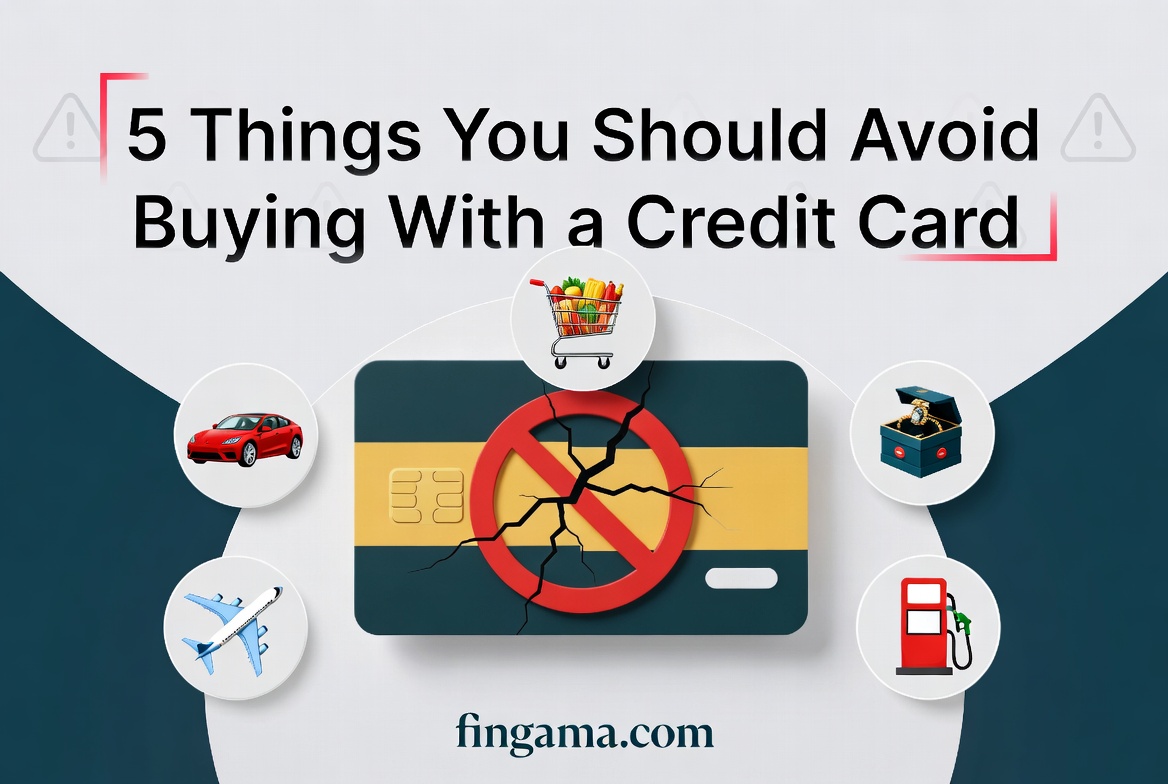
Here are 5 things you should avoid putting on a credit card if you want to stay financially stable and in control.
1. Daily Essentials You Can’t Pay Off Immediately
Groceries, gas, utilities—these are normal expenses. But they become a problem when you rely on credit cards to cover them without a plan to pay them off quickly.
I’ve been in situations where using credit for basic survival felt necessary. And when you’re in that position, it’s understandable.
But here’s the issue:
If essentials are going on a credit card every month and not getting fully paid off, you are not using credit—you are financing your survival at high interest.
That creates a cycle:
- spend on basics
- pay minimum balance
- balance carries over
- interest grows
- next month starts behind
Over time, this becomes very hard to break.
If you must use a card for essentials, the rule is simple: treat it like cash and pay it off immediately.
2. Cash Advances
Cash advances are one of the most expensive ways to use a credit card.
They usually come with:
- immediate fees
- higher interest rates
- no grace period
In simple terms, the moment you take cash from a credit card, you start losing ground financially.
I learned early on that cash advances are not a financial tool—they are an emergency cost that compounds quickly.
If you’re in a situation where you feel like you need one, it’s usually a sign that the underlying issue is income or budgeting, not access to credit.
3. Non-Essential Lifestyle Spending (Impulse Purchases)
This is where a lot of financial damage quietly builds.
Things like:
- gadgets you don’t need
- clothing bought emotionally
- dining out excessively
- subscriptions you forget about
These don’t feel big individually. That’s the danger.
Credit cards reduce friction. You don’t physically feel the money leaving, so it’s easy to justify small purchases repeatedly.
In my own experience, this is how debt slowly builds without obvious warning signs.
The problem isn’t one purchase—it’s the pattern.
If you can’t afford it in cash today, it’s usually not something you should be financing on credit.
4. Emergency Expenses Without a Repayment Plan
Emergencies happen. That’s life.
Medical bills, car repairs, unexpected costs—these are real situations where credit cards may be the only immediate option.
But here’s the key difference most people miss:
Using a credit card in an emergency is not the problem. Not having a repayment plan is.
What turns a temporary issue into long-term debt is:
- paying only minimums
- ignoring the balance
- treating it like “future problem”
I’ve seen how quickly an emergency expense becomes a long-term financial burden when it isn’t addressed immediately.
If you use credit for emergencies, the priority should be clearing that balance as fast as possible.
5. Long-Term Big Purchases You Can’t Pay Off Quickly
Large purchases like:
- furniture
- vacations
- electronics
- major home items
These can quietly hurt your financial stability if charged without a payoff plan.
The issue is not the purchase itself—it’s the timeline.
If a purchase takes months or years to pay off, you are paying significantly more than the actual price due to interest.
During earlier stages of my financial life, I made the mistake of treating credit limits as “affordability.” That mindset is dangerous.
A credit limit is not income. It is borrowed money with a cost attached.
If you can’t reasonably pay off a large purchase within a short period, it is better to delay or save first.
Final Thoughts
Credit cards are tools. They are not inherently good or bad.
But they amplify behavior.
If your habits are solid, they help build credit and flexibility.
If your habits are weak or emotional, they can quietly create long-term financial pressure.
From my own experience—especially through years of financial struggle and rebuilding—I learned this:
The real risk is not the credit card. The real risk is using it without a clear repayment mindset.
Before swiping, the question should always be:
- Can I pay this off quickly without stress?
If the answer is no, it’s worth pausing.
Financial stability is not built on access to credit—it’s built on control over how you use it.
Disclaimer
The information provided in this article on Fingama,com is based on personal experience, general financial knowledge, and educational insights. It is intended for informational purposes only and should not be considered professional financial, legal, or credit advice.
Credit card usage, credit scoring systems, and financial outcomes can vary depending on individual circumstances, credit history, income level, and lender policies. Readers should not make financial decisions solely based on this content.
Before making any major financial decisions—such as opening or closing credit accounts, taking on debt, or making large purchases—it is recommended to consult with a qualified financial advisor or credit professional.
Fingama.com and the author are not responsible for any financial losses, credit score changes, or other outcomes resulting from the use or interpretation of this information.